
Massachusetts Police Blotter Sources
No statewide blotter exists in Massachusetts. Local departments, sheriffs, and state police each publish their own arrest records. So a smart search starts with the agency that made the entry. A municipal log may cover one shift, a full day, a week, or a long archive. Sheriff pages handle current custody questions. State police news covers selected events and operations. The table shows a sample of these official formats side by side. It ranks no agency, and its local entries are not countywide totals. Keep the source's title and scope attached. Do that whenever you share an entry or check it against another record. No single source stands for every Massachusetts arrest.
| Official source | Useful window | What the archive does not claim |
|---|---|---|
| Taunton Police logs | A deep municipal log pattern reaching back to 2018 in the reviewed research. | It is not every Bristol County arrest. |
| Chelsea Police crime-statistic logs | Recurring Monday-through-Sunday periods. | A weekly archive is not a live custody list. |
| Leominster municipal archive | Monthly archive pages. | A monthly folder is not a same-day feed. |
Chelsea offers a good example of the weekly format. Its official log index shows how one city sorts police activity into defined weekly periods.
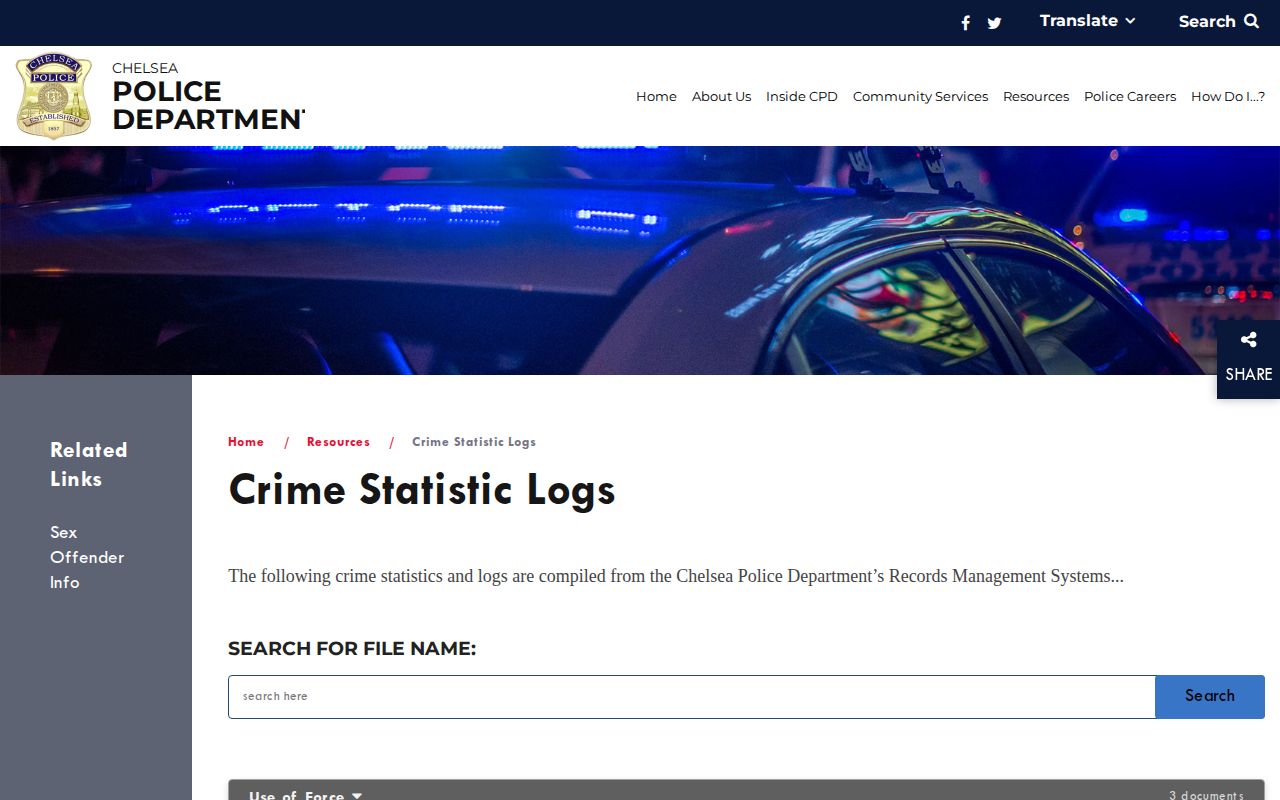
That period label tells you what the page actually covers. It does not make a Chelsea log into a statewide arrest record.
What an Arrest-Log Entry Shows
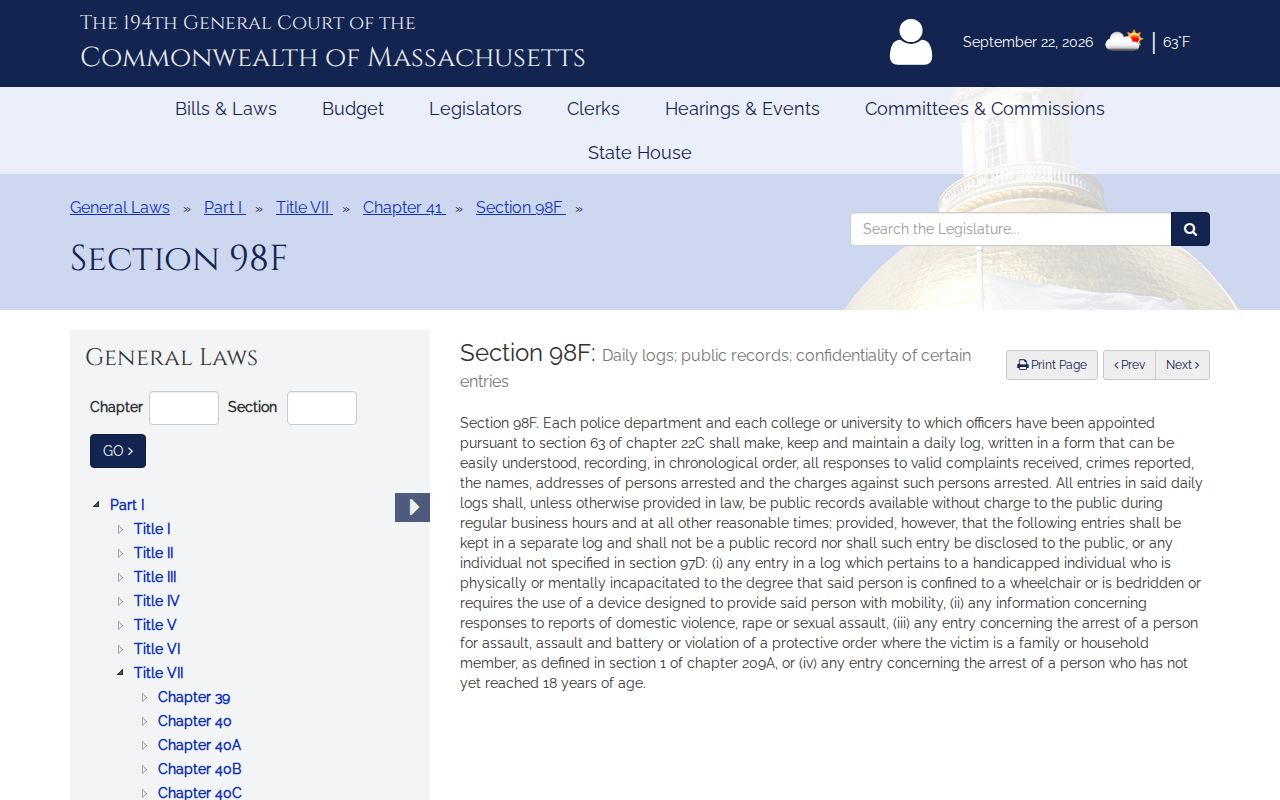
An arrest-log entry is a narrow public record, not a case file. Massachusetts spells this out in M.G.L. c. 41, § 98F, the municipal daily-log law. It requires a log of calls and complaints with names, addresses, and charges for people arrested or charged. Some categories sit in a separate nonpublic log. A booking photo or incident report follows different access rules entirely.
| Entry field | How to read it |
|---|---|
| Agency and place | Shows which department recorded the event and where it was logged. |
| Date or log period | Sets the span covered; it may not be the booking date. |
| Name and charge | Reports a police action or charge when those fields are public. |
| Call or event type | May describe a response, summons, complaint, or arrest, depending on the format. |
| Custody status | Often absent; a police log is not a live jail roster. |
| Photo and outcome | May be omitted; a later court disposition may be in another record. |
The statute itself defines both the public log and its limits. The image displays the law's official page, which is not an arrest list or a photo source.
A single entry can still be useful without telling the whole story. Read each field as the agency uses it, and confirm custody or court status with the proper custodian.
Note: Archive depth describes how far a source reaches back, not how many arrests it captured or whether its entries are current.
Massachusetts Arrest Dates and Post Dates
Blotter dates and posting dates rarely match up neatly. An archive can hold old material without proving that every day is represented. Some municipal logs cover one calendar day. Others span a fixed period or post late. Northampton's official police resource showed a long gap between an incident date and its print date. That gap makes the date field matter more than a page's latest update label. The Massachusetts State Police keep a news archive plus separate historical Arrest Details files. Those older files are historical, not current custody lists. The screenshot shows the official file-list structure.
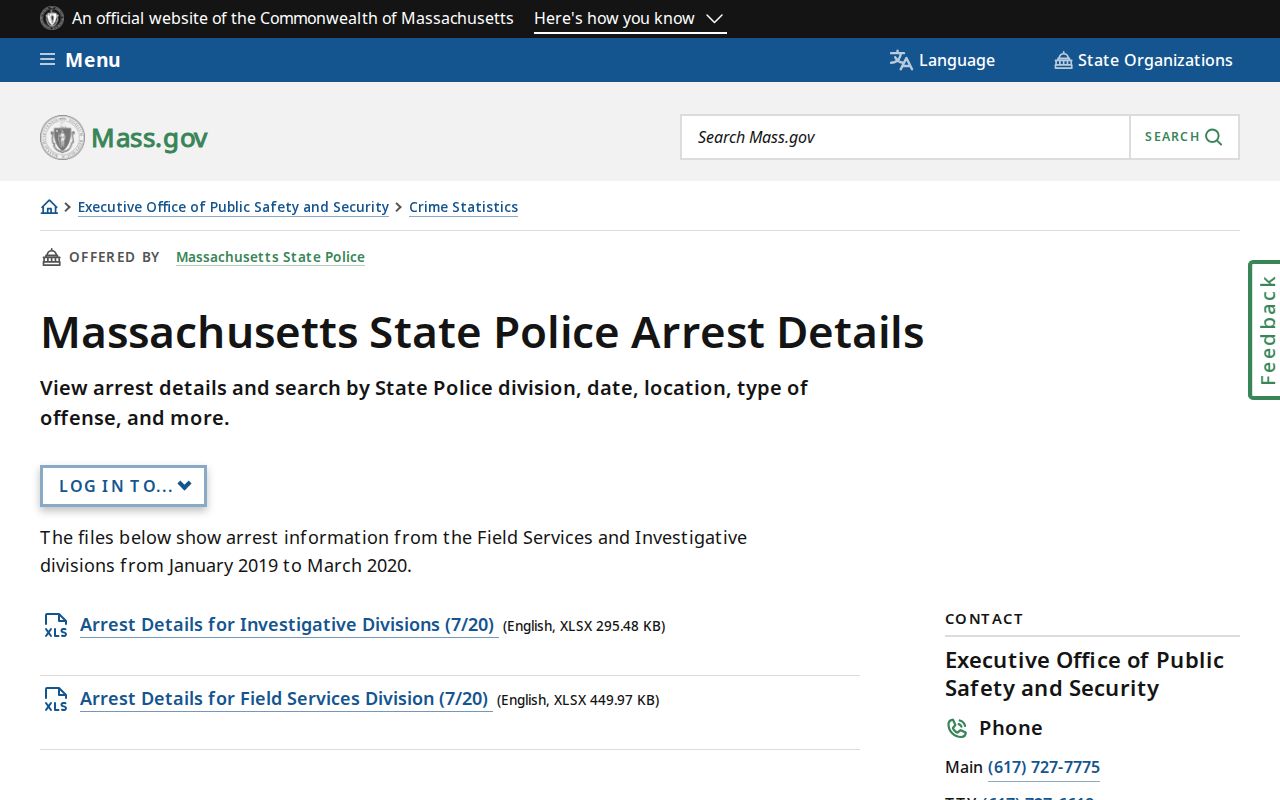
State police releases lean toward big events. Think multi-town operations or notable arrests. That archive can't replace a municipal log for a town or a sheriff record for who is in custody.
Massachusetts Weekend Arrest Logs
Weekend and holiday arrests often surface in a later batch. Some logs cover a fixed day. Some post weekly, and some roll activity into a longer span. A Monday file may include weekend incidents. A holiday schedule may shift publication without changing the arrest date. Massachusetts sources share no statewide posting clock. Never treat a weekly or monthly archive as a same-day count. Leominster's municipal archive is a good example. It is organized by month, giving a longer local window. The image shows that archive structure, not a live custody list.
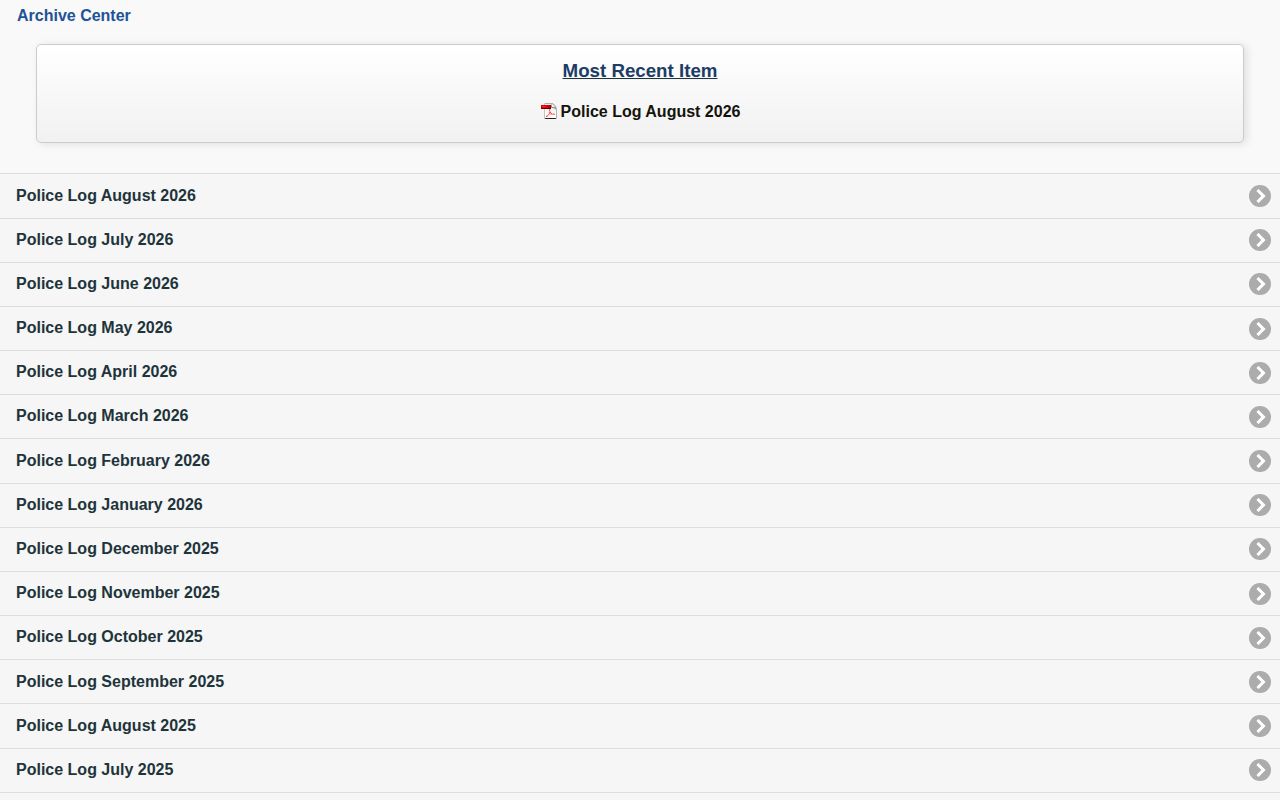
When dates cross a weekend, keep the source's period intact. A log helps you locate an entry. The arresting agency remains the place to confirm whether a person was booked, released, or charged.
Note: The calendar period printed on a file matters more than the day it appears in a search result.
How to Read a Massachusetts Blotter
A careful blotter search keeps three things together. Those are the source, the time period, and the type of record. Start with the town or city of the arrest. Then follow that local agency's archive rather than blending nearby places into one count. The County Directory routes you to local agencies and their county-level record pages. For a narrower view, the Arrests Last 24 Hours page covers the same-day landscape. This multi-day view suits dated logs and archives reaching beyond one day.
- Open the official police or sheriff page and record its agency name and stated coverage.
- Choose the date range that includes the event, then read the incident date and the post or print date separately.
- Check whether a row describes a call, arrest, charge, booking, release, or current custody; do not treat those terms as synonyms.
- If the person is not listed or the log does not show an outcome, ask the originating agency for the dated record or contact the right custody office.
Massachusetts police logs can leave out private or protected material. A log may show a public charge. The incident report, witness names, juvenile record, or photograph stays withheld. No online archive amounts to a complete case file. Check a court docket or the relevant agency record for a later outcome. Do not infer one from an old blotter line.
Massachusetts Arrest News Adds Context
A newsroom story can explain why someone was arrested in Massachusetts. It is not a booking system. Regional outlets such as WBUR Investigations, MassLive News, and Boston.com local news each pick their own arrest and court stories, so coverage is a slice, not the whole record. For a name, a charge, or custody status, turn to the agency or the court itself. Third-party indexes sit on a separate layer. The Mugshots.com Massachusetts landing page sorts entries into county categories, but its labels and counts are unofficial, not a current or complete arrest roster. It shows structure only. No booking photo is reproduced from it.
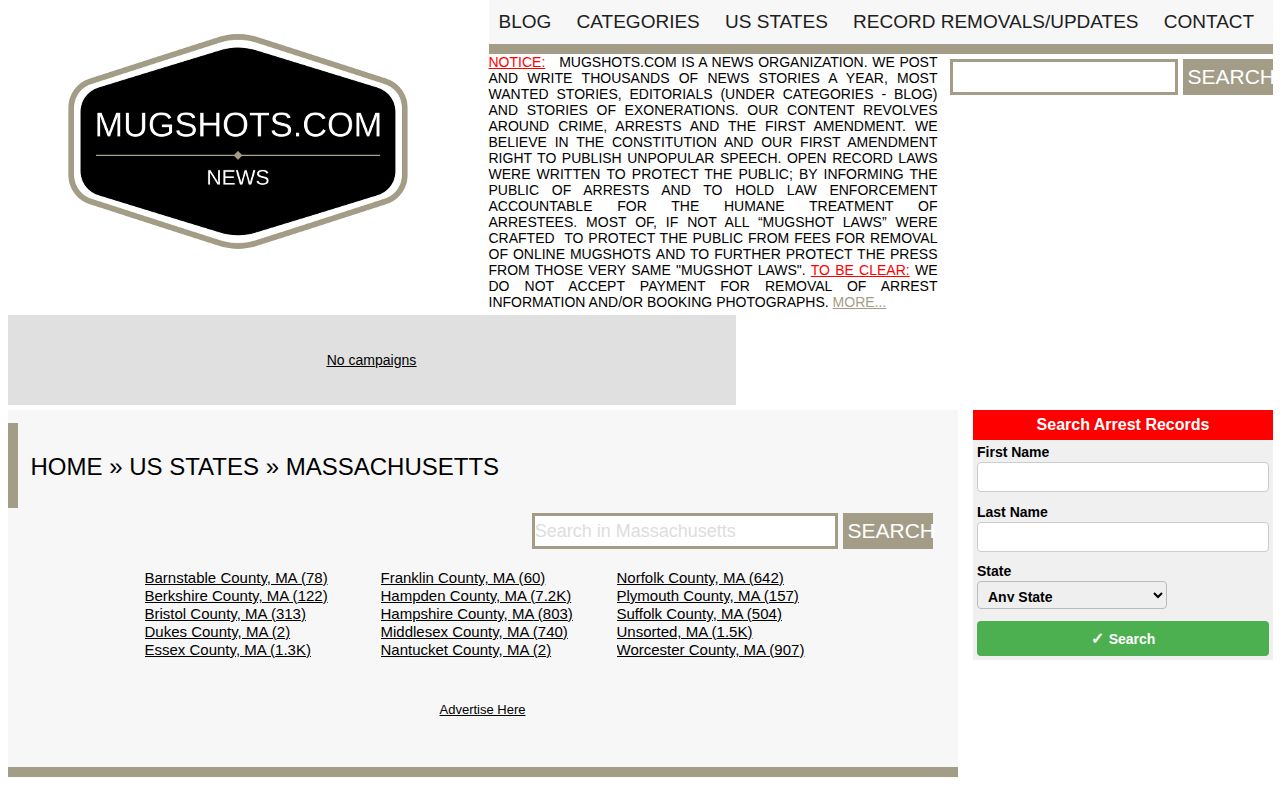
Third-party arrest pages can go stale fast. Some are incomplete. Others attach the wrong name to an arrest, so treat them as leads and let an official police log or court record settle the facts.
Massachusetts Arrest Records in Archives
A blotter page is not the official record. Agencies must retain records on set schedules. The Massachusetts Statewide Records Retention Schedule and the municipal retention schedule sort records by agency and series. They govern transfer and destruction timing. Neither sets one public-web period for booking photographs. A department can pull a page from its site while the record itself stays on file for years. For a modern arrest, send a written request to the records access officer at the police department, sheriff, clerk, or other current custodian. Name the record type, place, and date range. State your preferred format too. Redactions, fees, and exemptions can still apply. The Secretary of the Commonwealth's public-records request guidance walks through each step of the process. Older correctional records may have moved into an archive. The Massachusetts Archives research service helps identify holdings and request steps for transferred records. Give the person's name, the institution, the record type, and the years you want. Archives processing takes time, and privacy limits still apply. The service promises no fixed turnaround for old arrest inquiries. Keep the word "archive" precise. Taunton's deep municipal log, Chelsea's weekly files, and Leominster's monthly folders are online police archives. State Archives collections hold selected historical records. None of them captures every Massachusetts arrest. A copy on another site does not prove the current custodian still holds the original. Start any older-record search by finding which agency created the record and whether it sits with that custodian today.
Note: Retention tells a custodian how to manage a record; access and online publication are separate questions.